Reviewed by the HyaluFlow Health Editorial Team | Published: October 6, 2026 | Last Updated: October 6, 2026
Quick Answer: Milia removal is usually unnecessary because milia are harmless and often disappear on their own. When they persist or you want them removed for cosmetic reasons, a dermatologist can safely open and extract them using a sterile technique.
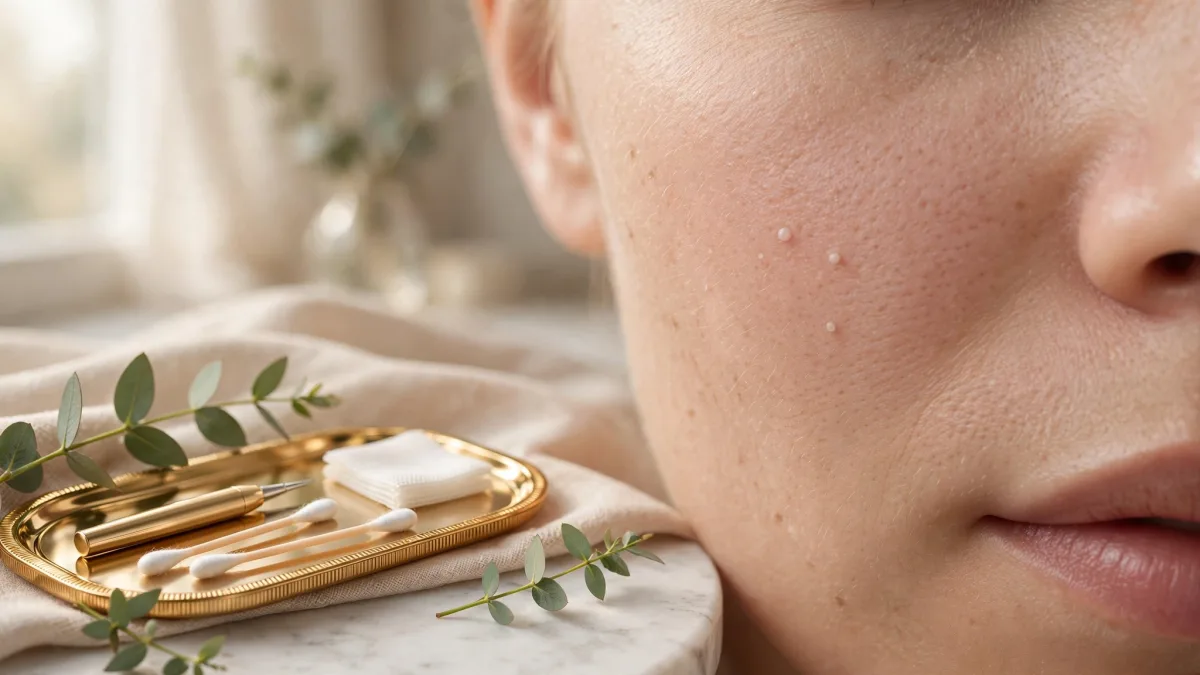
Milia are tiny, pearly-white cysts containing keratin. They are often mistaken for whiteheads, but milia are not acne. Cleveland Clinic explains the difference between milia and acne.
Trying to squeeze, scrape or pierce milia yourself can injure the surrounding skin and increase the risk of infection or scarring.
Key Takeaways
- Milia are small, harmless keratin-filled cysts.
- They commonly appear around the eyes, cheeks, nose and forehead.
- Many cases clear without treatment.
- Professional extraction is one of the most direct removal options.
- Do not squeeze or puncture milia at home.
- Topical retinoids may help some people with persistent or widespread milia.
- Sun protection and gentle skin care may help reduce certain types of milia.
What Causes Milia?
Milia develop when dead skin cells become trapped beneath the skin and form small keratin-filled cysts. They can occur at any age and are particularly common around the eyes and cheeks.
Some milia develop without an obvious trigger. Others, known as secondary milia, can appear after skin injury, burns, blistering rashes, excessive sun exposure or certain topical medications.
Heavy creams or ointments may also contribute to some cases. DermNet explains the different types and causes of milia.
Do Milia Go Away on Their Own?
Often, yes. Adult milia can disappear naturally over several weeks or months, although some can persist much longer.
Because milia are harmless, treatment is optional unless they are persistent, bothersome or causing cosmetic concern. Newborn milia are especially likely to disappear without treatment.
What Is the Best Milia Removal Treatment?
For an individual persistent milium, professional extraction is one of the most common approaches. A healthcare professional can use a sterile needle or blade to create a small opening and remove the trapped material.
This is different from squeezing a pimple. The technique and sterile equipment help reduce unnecessary trauma to the surrounding skin.
Other treatments may be considered depending on the number, type and location of the milia. These can include cryotherapy, curettage, electrosurgery or laser-based procedures. DermNet outlines clinical treatment options for milia.
Can Retinoids Help With Milia?
Topical retinoids may be useful for some people with persistent or widespread milia because they encourage normal shedding of skin cells. Options can include adapalene or prescription tretinoin, depending on the situation.
However, retinoids can cause dryness, irritation and increased sensitivity. They are not appropriate for everyone, so speak with a healthcare professional before starting prescription treatment.
Retinoids also should not be applied close to the eyes without appropriate medical guidance.
Can You Remove Milia at Home?
You should not try to puncture, scrape or squeeze milia yourself. Unlike a typical whitehead, a milium is a small cyst beneath the surface, so forceful extraction can damage nearby tissue without properly removing it.
DIY extraction can lead to infection, prolonged inflammation, discoloration or scarring. Cleveland Clinic specifically advises against squeezing or scraping milia at home.
A gentle cleanser and regular skin care are safer choices while you wait for a lesion to clear.
How Can You Prevent Milia?
You cannot prevent every case of milia, especially primary milia that develop without an obvious cause. However, protecting your skin and avoiding unnecessary irritation may reduce certain forms.
- Use sunscreen consistently when outdoors.
- Avoid excessively heavy creams if they appear to trigger bumps.
- Do not pick or repeatedly irritate the skin.
- Use gentle cleansing rather than aggressive scrubbing.
- Follow medical instructions when using topical steroids or other medications.
Sun protection is particularly important because some secondary milia can develop after skin damage from sunlight.
When Should You See a Dermatologist?
Consider seeing a dermatologist if a bump persists for months, keeps returning, appears in large numbers or does not look like typical milia.
Professional assessment is also useful because several other skin conditions can resemble small white bumps. A dermatologist can usually diagnose milia by examining the skin, although additional testing may occasionally be needed.
The Bottom Line
Milia removal is usually straightforward when performed by a qualified professional. Many milia disappear naturally, while persistent lesions can often be removed through sterile extraction or other dermatological treatments.
The most important rule is simple: do not squeeze or puncture milia at home. If you want faster removal or are unsure whether a white bump is actually milia, professional evaluation is the safer approach.